GLP-1 Weight Loss & Waxing: What Beauty Pros Should Know
If you've noticed more clients talking about medications such as Wegovy, Zepbound, Ozempic or Mounjaro, you are not alone.
GLP-1 medications have quickly become part of everyday conversation around diabetes, weight management and significant weight loss. And as their use has grown, another conversation has followed: What happens to the skin when the body changes significantly?
That question is no longer limited to dermatologists and medical aesthetic practices.
It matters to waxing professionals too.
You work directly with body skin every day; arms, legs, abdomen, back, bikini area, underarms, chest and intimate areas. As more clients experience substantial changes in body weight and composition, you may begin seeing skin that looks or feels different than it did several appointments ago.
That does not mean a waxing professional should diagnose medication side effects or offer medical advice.
It does mean today's beauty professional should know what questions to ask, what changes to notice and when a client's skin deserves a more cautious conversation.
First: What Are GLP-1 Medications?
GLP-1 receptor agonists are medications used to treat conditions including type 2 diabetes and obesity. Depending on the medication, they can affect appetite, food intake, blood glucose and digestion and may produce substantial weight loss in some patients.
You may recognize names such as semaglutide or tirzepatide or consumer brand names such as Ozempic, Wegovy, Mounjaro and Zepbound.
For the waxing professional, however, the most important point isn't memorizing drug names. It is understanding that significant weight loss can change the environment of the skin you are working on.
The Beauty Conversation Has Moved Beyond “Ozempic Face”
You've probably heard the term “Ozempic face.”
It is an informal phrase that has been used to describe facial volume loss, sagging or a more aged appearance following substantial weight loss. But these changes are not limited to the face, nor are they exclusive to one particular medication.
Loss of subcutaneous fat and changes following significant or rapid weight loss can also become noticeable on the abdomen, thighs, arms, chest, buttocks and other areas of the body. Recent dermatology literature has reported concerns including decreased firmness, changes in elasticity, loose or folding skin and altered body contours among people experiencing major weight loss.
That makes this a body-skin conversation and body skin is exactly where waxing professionals work!
Is the Medication Changing the Skin—or Is the Weight Loss?
This distinction matters.
Not every skin change reported by someone taking a GLP-1 medication can automatically be blamed on the drug itself.
The American Academy of Dermatology notes that some visible changes are associated with rapid or substantial weight loss, while researchers are still studying whether GLP-1 medications themselves have additional direct effects on skin, hair and other tissues. There may also be contributing factors such as hydration, dietary intake, age, previous weight history and overall health.
That is exactly why a waxing professional should avoid making statements such as:
“Your medication caused this.”
A much better professional approach is:
“I've noticed your skin seems different from your previous appointments. Has anything changed with your health, medications or skincare routine that I should know about before today's service?”
That keeps the conversation observational rather than diagnostic.
What Might a Waxing Professional Notice?
A client experiencing major weight loss may present with skin that appears different from what you remember.
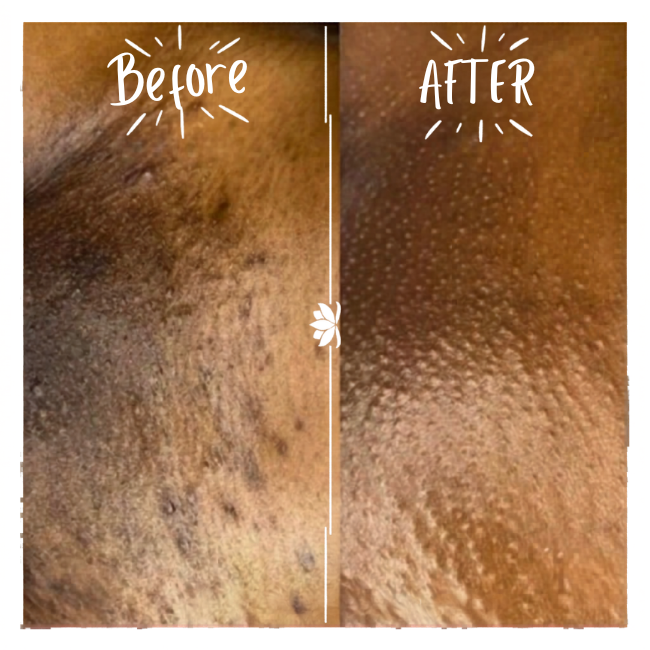
You may notice increased looseness or folding in certain areas, a creepier-looking texture, greater dryness or changes in overall body contours. The client may also tell you that their skin feels different, that clothing is rubbing differently or that areas of the body that previously did not touch now create folds or vice versa.
The AAD specifically notes that some people taking GLP-1 medications report dry skin, changes in facial volume, looser skin and irritation where skin folds against itself. Research is also increasingly examining how significant weight loss can affect skin firmness and soft tissue throughout the body.
None of these automatically mean the client cannot be waxed.
They do mean the professional should look at the skin that is actually in front of them instead of assuming today's skin is identical to the skin they treated six months ago.
Your Client Consultation Just Became More Important
Many waxing professionals already ask clients whether medications, skincare products or health circumstances have changed.
GLP-1 use reinforces why that question matters.
You do not need to interrogate clients about why they are taking a medication, how much weight they have lost or what dose they are using.
You do need enough information to appropriately evaluate the skin and determine whether anything has changed since the client's previous service.
A strong consultation can include questions such as:
- Have there been any changes to your medications since your last appointment?
- Have you experienced significant weight loss or changes in your skin recently?
- Has your skin become noticeably drier, more sensitive or irritated?
- Are you experiencing any rashes, broken skin or irritation in the area we're treating today?
- Have you introduced new active skincare products or body treatments?
Then do what professionals should always do: Observe before you proceed.
Your state regulations, professional training, product directions and scope of practice should guide the service.
Do Not Turn GLP-1 Use Into an Automatic Waxing Contraindication
This point is important.
The fact that a client takes a GLP-1 medication does not give a waxing professional enough information by itself to determine the condition of that client's skin.
Two people may use similar medications and present completely differently.
One client may have experienced gradual weight loss and have healthy, comfortable skin.
Another may arrive with significant dryness, irritated folds, an active rash or skin that simply doesn't look appropriate to treat that day.
The professional question should therefore not be: “Are you on Ozempic?”
It should be: “Is this skin appropriate for today's service?”
That is a much more useful standard.
Pay Particular Attention to Areas of Friction and Skin Folding
Significant body changes can create new areas of friction or alter existing ones.
Abdominal folds, inner thighs, underarms, the bikini area and other high-contact zones can be affected by moisture, rubbing and occlusion. The AAD advises keeping areas where skin touches skin clean and dry because irritation can occur within folds.
For waxing professionals, these are already important areas.
If you see active irritation, broken skin, rash, unexplained swelling, sores or another condition that concerns you, that is not an invitation to diagnose it.
It is a reason to stop and refer the client to an appropriate medical professional when necessary.
Professional judgment sometimes means knowing when not to perform a service.
Dryness and Barrier Health Deserve Attention
Another reported concern among some GLP-1 users is dryness.
The AAD notes that reduced food and fluid intake, gastrointestinal side effects and other factors can contribute to dehydration and dry skin in some patients. Dermatologists commonly recommend gentle cleansing, moisturization and sun protection as part of healthy skin care.
For the waxing professional, this does not mean creating a special “GLP-1 waxing protocol.”
It means reinforcing something Bombshell has discussed for years:
Skin condition matters.
When a client presents with dry, uncomfortable or sensitized-looking skin, the professional should recognize that today's service may require a different level of assessment than a routine repeat visit.
This also creates another reason to educate clients about maintaining their skin between appointments rather than waiting until the day of the wax to think about it.
Post-Wax Recovery May Matter Even More to These Clients
Regardless of whether a client uses a GLP-1 medication, freshly waxed skin needs appropriate recovery.
That means the first hours after a waxing service should emphasize comfort and avoiding unnecessary irritation, not aggressive correction.
For clients who already tell you their skin has become drier or more reactive during significant weight loss, that education becomes especially valuable.
Remind them that the immediate post-wax period is not the time to introduce a new exfoliating acid, aggressive scrub or unfamiliar body treatment.
Recover first. Correct later.
Homecare Should Support the Skin—Not Promise to “Fix” Weight-Loss Skin
This is another important professional boundary.
A moisturizer, cleanser, exfoliating product or botanical oil can support the appearance and condition of the skin.
- It cannot replace lost subcutaneous volume.
- It cannot remove substantial loose skin.
- Waxing professional should not promise that homecare will reverse structural body changes caused by major weight loss.
In fact, dermatologists and plastic surgeons use very different treatments when significant laxity or volume loss is the client's primary concern.
That doesn't make skincare irrelevant. It simply means we need to set realistic expectations and professional homecare can focus on what skincare is good at supporting:
- cleansing
- hydration
- surface texture
- barrier comfort
- exfoliation when appropriate
- sun protection.
That is a far more credible conversation.
This Is an Opportunity to Become a Better Skin Observer
The GLP-1 trend highlights something bigger happening in professional beauty. Your clients' skin does not exist in isolation. It changes with:
- Age
- Hormones.
- Medications.
- Weight fluctuations.
- Sun exposure.
- Skincare routines.
- Health conditions.
- Lifestyle.
- And time.
The best waxing professionals notice those changes. Not because they are trying to become doctors but because they understand that waxing is performed on skin, and good professionals pay attention to the condition of the skin before providing the service.
How to Talk About Body Changes Without Making the Client Uncomfortable
Significant weight loss can be emotional. Some clients may be thrilled with the changes in their bodies. Others may feel self-conscious about loose skin, stretch marks, changes in body shape or areas that now look different. Therefore, avoid congratulating clients on weight loss unless they bring it up positively themselves.
Avoid language such as: “Wow, you've lost so much weight.”
Instead, keep the conversation relevant to the service:
“Your skin seems a little drier than when I saw you last. Have you noticed that too?”
or:
“Before we begin, has anything changed with your health, medication or skincare since your last appointment?”
Those questions are professional, neutral and useful.
The client does not need commentary on their body.
They need confidence that you are paying attention to their skin.
Know When the Conversation Leaves Your Scope
GLP-1 medications are prescription medical treatments.
Questions about medication dosage, nutritional deficiencies, unexplained hair loss, persistent skin reactions, significant rashes or whether someone should continue taking a drug belong with the client's prescribing clinician or dermatologist.
FDA-approved GLP-1 medications have specific indications, risks and prescribing requirements, and the FDA continues to warn consumers about unapproved or improperly compounded versions.
Your role is not to manage the medication.
Your role is to recognize when something you see on the skin should change the waxing conversation or require a medical referral.
That boundary protects both you and your client.
The Bigger Opportunity for Waxing Professionals
GLP-1 medications may be the headline. But the real professional lesson is bigger.
Clients are changing.
Their bodies are changing.
Their expectations around body skincare are changing.
And the modern waxing professional needs to understand more than hair removal alone.
That means:
- Better consultations.
- Better observation.
- Better skin education.
- Better post-wax guidance.
And knowing when an issue belongs outside the treatment room.
The professionals who develop that level of awareness are not diagnosing clients. They are doing something far more valuable: paying attention.
Final Thought
GLP-1 weight loss is creating a new conversation across dermatology, aesthetics and beauty.
Waxing professionals belong in that conversation but from the right perspective.
You don't need to become an expert in weight-loss medications.
You need to become an expert at recognizing the skin in front of you.
Ask what has changed.
Observe the treatment area.
Respect the skin barrier.
Support appropriate post-wax recovery.
Set realistic expectations about homecare.
Refer concerns when they fall outside your scope.
Because your client's body may change between appointments.
Your standard of care shouldn't.
FAQ
Can clients taking GLP-1 medications still get waxed?
Taking a GLP-1 medication alone does not tell a waxing professional whether a client's skin is appropriate for a service. Evaluate the treatment area, review relevant changes in medications and skin condition, and follow your training, state requirements and product contraindications.
Can GLP-1 weight loss cause loose skin?
Significant weight loss can result in reduced skin firmness, loose or folding skin and changes in body contour. Emerging research is examining how GLP-1-associated weight loss relates to these changes, although not every reported skin change can necessarily be attributed directly to the medication itself.
What skin changes have been reported with GLP-1 medications?
The American Academy of Dermatology notes reports including dry skin, hair thinning, facial volume changes, loose skin and irritation in areas where skin folds against itself. Some inflammatory skin conditions may also improve, underscoring that the relationship between GLP-1 drugs and skin is complex.
Should waxers ask clients if they take GLP-1 medications?
Medication changes can be relevant to a professional waxing consultation, but the purpose should be to understand the client's skin and service suitability—not to diagnose or advise them about their prescription.
Is “Ozempic face” caused only by Ozempic?
No. “Ozempic face” is an informal term commonly used to describe facial volume loss or laxity seen after significant weight loss. Similar changes can occur following substantial weight loss through other medications, surgery or lifestyle changes.
Related post

30
Apr

20
Apr

13
Apr

04
Apr

27
Mar
RECENT POSTS
28.August.2026
Male Intimate Waxing: Pre-Wax & Post-Wax Care for a Better Client Experience
0 Comments

01.July.2026
Waxed Skin: Why the First 48 Hours Can Make or Break the Client’s Skin Experience
0 Comments
22.June.2026
The Wax Appointment Is Only Part of the Result: Why Homecare Matters Before and After Waxing
0 Comments